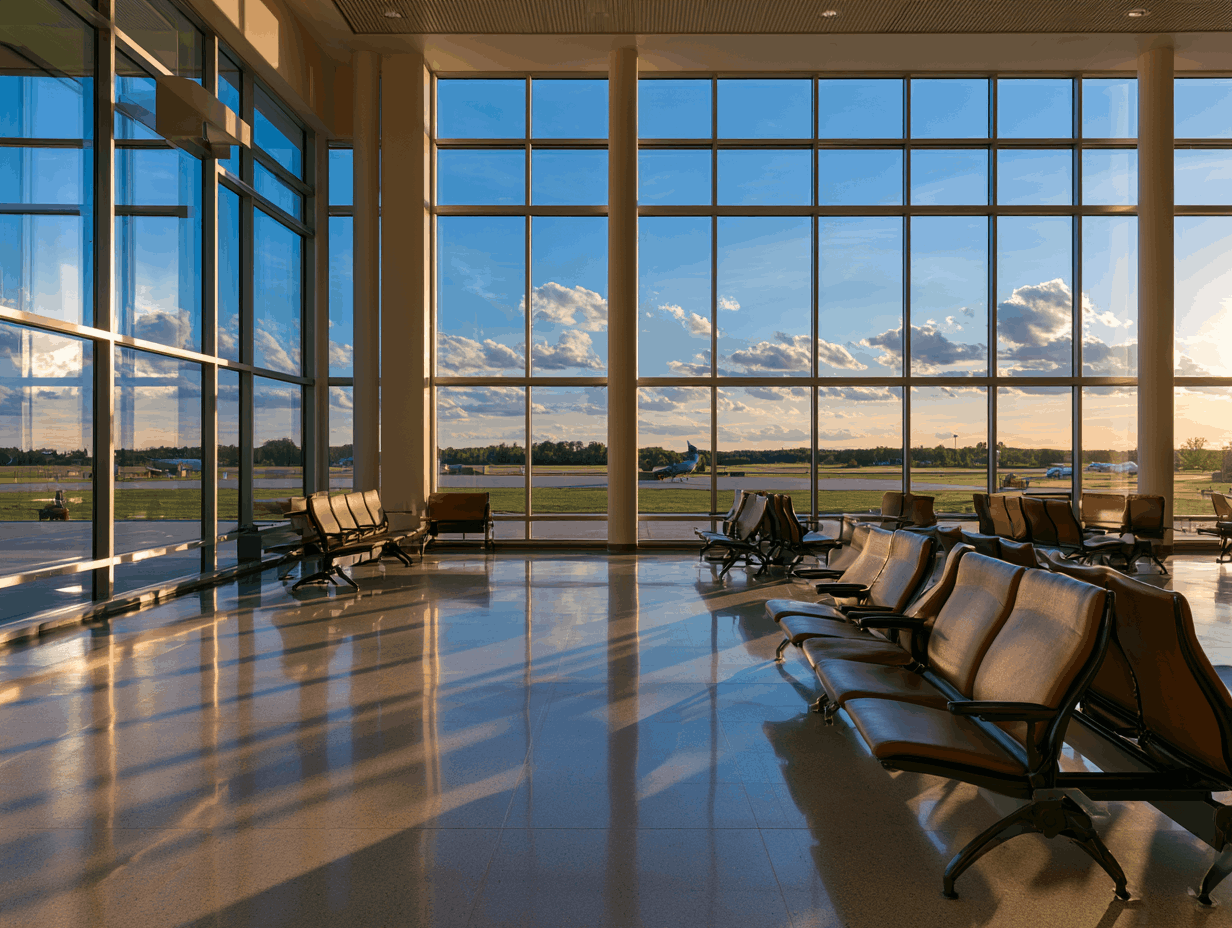
A nearby secondary airport that stays quiet and often has last-minute seats when the main hub is chaotic.
Your flight disappears from the board and the main airport turns into a crowd of tired people refreshing screens. Queues form at every desk and the remaining seats vanish in minutes. A short distance away sits a smaller airport that most travellers ignore until this exact moment.
That secondary place handles far less traffic so the check in lines stay short and the departure boards still show open seats on regional hops. Ground transfers between the two airports usually take under an hour by bus or local train, sometimes even less late at night when the roads are clear. Once you reach the quieter terminal the atmosphere changes completely. Staff have time to help and the remaining flights have not been stripped of every last place.
Three practical ways to use the empty airport when the main one collapses.
First way works if the cancellation hits in the morning. You collect your bags, catch the next shuttle or regional bus, and still make an early afternoon departure from the smaller field. The total delay often ends up shorter than waiting for the next available slot at the busy hub.
Second way suits evening cancellations. The secondary airport keeps a few late flights that the main place has already filled or cancelled. You arrive there while the big terminal is still packed and find seats that were never in high demand. A short night transfer can put you back on track before midnight.
Third way appears during wider disruptions. When weather or strikes hit the main airport the smaller one sometimes stays open longer because its runways and traffic patterns differ. Checking its board early can reveal options that disappear only an hour later. The key is moving quickly rather than joining the long customer service lines.
It feels strange to leave the airport you already reached and head to another one. Yet the quiet terminal often turns a full day of waiting into a few hours of simple travel. You trade the chaos for a shorter queue and a seat that still exists.
No. Trains, buses, ferries and border crossings appear just as often.
When a new pattern shows up clearly enough to explain in a few paragraphs.
Yes. If it solved a real problem we are glad to look at it.