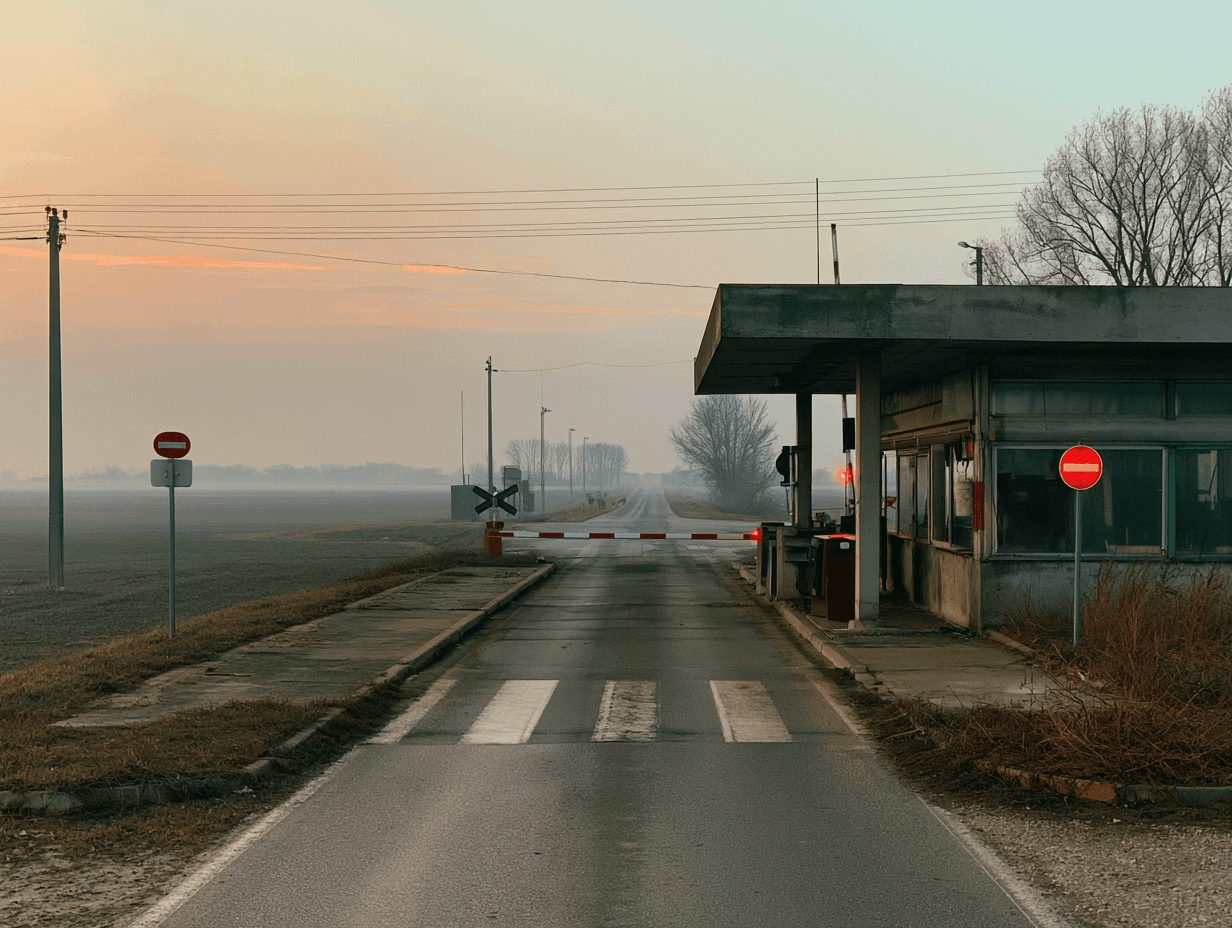
Crossing one border to catch a different network that keeps moving while yours is frozen.
Trains cancel, buses stop and the local network freezes for the day. Announcements repeat the same delays and the ticket offices have nothing left to offer. Just across the border another system is still running on its normal timetable. Reaching that network turns a full stop into a workable detour.
The border crossings in many places stay open even when domestic services shut down. A short taxi, local bus or even a longer walk in some rural spots gets you into the neighbouring system. From there the trains and coaches continue as usual because the disruption never reached them. The extra distance looks inefficient on a map yet the moving schedule often delivers you faster than waiting for your own network to restart.
Three ways this border hop works in practice.
One version uses a nearby road crossing. You leave the stalled station, ride twenty or thirty minutes to the other side, and board a regular service that was never affected. The total delay stays limited and you keep progressing toward the final destination.
Another version relies on a rail border point that still has a few daily trains. Even if your original line is dead the international service continues. You change once on the far side and reconnect with a route that heads in the right direction.
The third version appears during wider strikes or weather events. While one country stops almost completely the neighbour keeps partial service. Checking the cross border boards early can reveal seats that disappear once word spreads. Moving sooner rather than later is the difference between a short detour and a lost day.
Leaving your own network feels like giving up at first. After the first successful crossing the frozen timetable behind you starts to look like a problem you no longer have to solve. You trade a closed system for an open one and the journey continues while others are still waiting for updates.
Nothing works every single time. They work often enough to be worth knowing when the usual options fail.
No. Trains, buses, ferries and border crossings appear just as often.
When a new pattern shows up clearly enough to explain in a few paragraphs.
Yes. If it solved a real problem we are glad to look at it.